

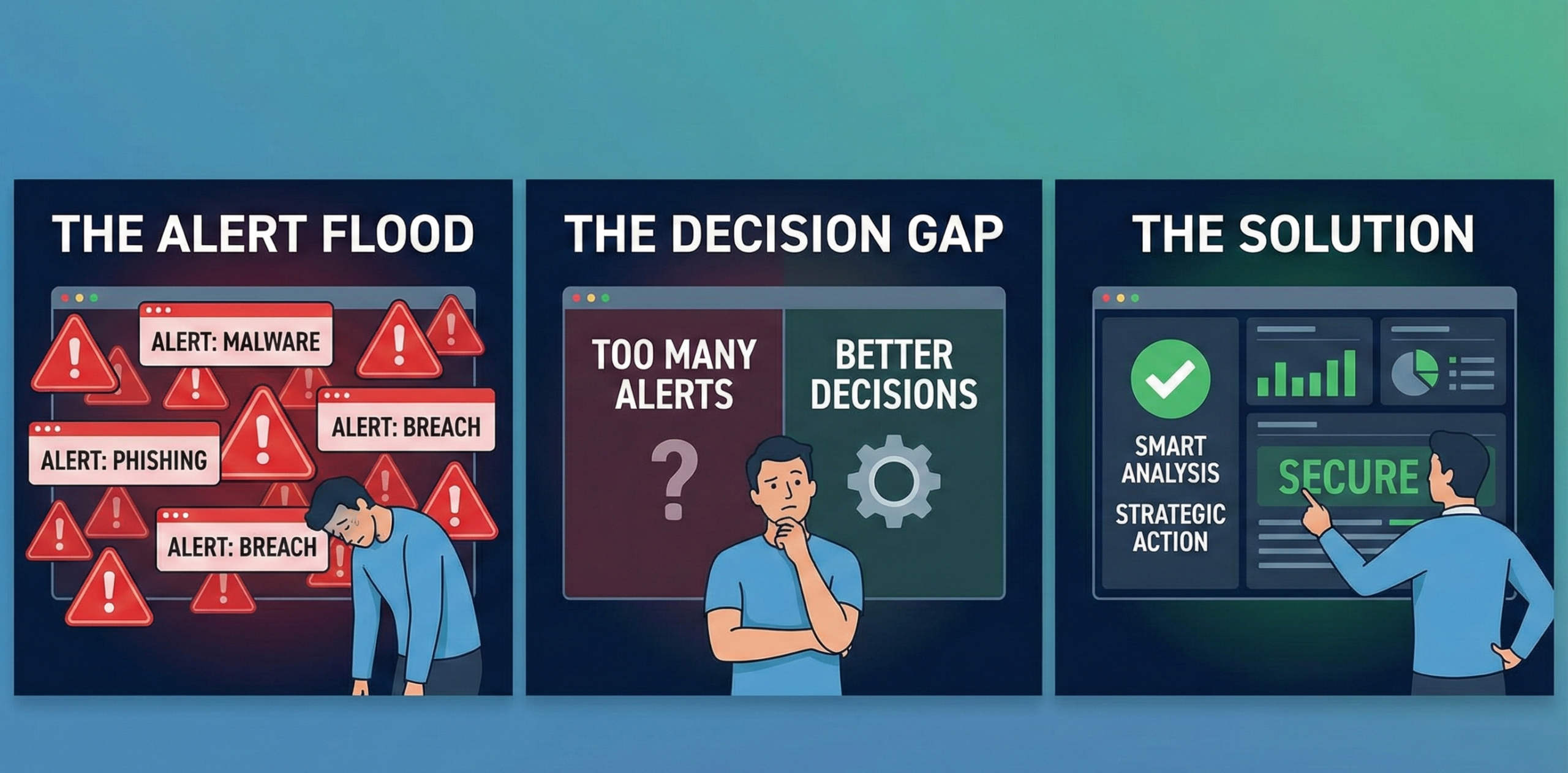
Every security professional has lived this moment. You log in at the start of the day, hoping for a clear plan. Instead, your screen fills up with alerts. Hundreds. Sometimes thousands. Each one flashing a warning, each one claiming it’s important. Critical. High. Medium. Low. The list keeps growing, even before you’ve had time to understand the first few. It’s exhausting. And it’s not because security teams don’t care or aren’t skilled enough. It’s because modern security has become very loud and not very helpful.
Today’s biggest cybersecurity problem isn’t that we don’t see threats. It’s that we don’t know which ones truly matter. Security tools are doing exactly what they were built to do. They scan everything. They detect everything. They report everything. But humans can’t think at the speed machines generate data. When every scan throws up hundreds of alerts, teams are forced to make quick decisions with limited context. They fix what looks urgent.
They fix what’s easiest. They fix what will stop the dashboard from blinking red. And slowly, something dangerous happens important issues start to look like just another alert. This is alert fatigue. Not because teams stop caring, but because constant pressure dulls judgment. When everything is marked urgent, nothing feels truly urgent anymore.
The Uncomfortable Truth About Alerts
Here’s a truth most teams understand but rarely say out loud: Most alerts don’t lead to real attacks. Yes, they may be technically correct. Yes, they may follow severity rules. But only a small number can be exploited in the real world. Fewer still can cause serious damage to the business. Yet security teams are asked to treat them all almost equally. An alert usually tells you what exists. It rarely tells you what to do next.
- Is this vulnerability exposed to the internet?
- Is it already being used by attackers?
- Does it affect a system the business depends on today?
- What happens if we don’t fix it this week?
Without these answers, teams are left guessing. And guessing under pressure is not a strong foundation for security.
Security Is Now a Decision Problem
For a long time, cybersecurity was about tools. If something went wrong, the solution was simple: buy another product. More tools meant more protection. That logic no longer works. Most organisations already have plenty of tools. What they don’t have is clarity. Security teams are no longer struggling to find problems they’re struggling to prioritise them.
Security today is about decisions:
- What do we fix first?
- What can safely wait?
- Where should our limited time go?
What Cyber Security Teams Actually Want
If you ask cyber security teams what they need, their answers are surprisingly simple.
They don’t want more alerts.They want fewer, smarter ones.
They want:
- Clear priorities
- Real-world risk context
- Confidence that they’re fixing the right things
- Tools that help them explain risk to leadership
They want help answering the hardest question in security: “What matters right now?”When teams have that clarity, everything changes. Work becomes focused. Stress reduces. Decisions improve.
From Alerts to Answers
The future of cybersecurity isn’t about louder alarms. It’s about better guidance. Instead of listing every possible issue, modern security needs to highlight the few that truly put the organisation at risk. It needs to connect technical findings with business impact. When tools do this well, security teams stop reacting and start leading. They move from chasing alerts to managing risk. That’s the difference between knowing something is wrong and knowing what to do about it.
Where Invield Comes In
This belief is at the core of Invield — The Invulnerable Shield. Invield is built for CISO & his teams who are tired of noise and want clarity. Instead of overwhelming teams with endless alerts, it helps them focus on what truly deserves attention. By analysing risk in context—how exploitable an issue is, how exposed it is, and how much it matters to the business—Invield supports better decision-making. It doesn’t replace human judgment. It strengthens it.
“The goal is simple: help Cyber security team spend their energy where it makes a difference”.
- Better decisions don’t just help the security team. Developers face fewer unnecessary disruptions.
- Leadership gets clearer, more honest risk insights.
- Compliance becomes calmer and more planned.
- The organisation moves faster without increasing risk.
- Security stops being a constant emergency and starts becoming a steady, trusted function.
That’s when security adds real value not by saying “no” more often, but by saying “here’s what matters most.”
- Data-Driven Alert Tuning: Continuously refine detection rules based on actual threat patterns to systematically reduce false positives and eliminate noise at the source.
- Automated Prioritisation Frameworks: Implement intelligent systems that integrate comprehensive risk context and asset value to ensure analysts focus efforts where they’ll have maximum impact.
- Analyst Wellbeing Programmes: Mandate regular recovery periods and task diversity to combat cognitive fatigue and maintain peak decision-making capabilities (OX Security).
Conclusion: Better Decisions, Not More Alerts
Quality Over Quantity
The security industry must fundamentally shift from alert volume to alert quality and robust decision support systems. Invield’s Invulnerable Shield empowers SOCs to concentrate resources on stopping genuine threats faster and more effectively. The future of cybersecurity lies in smarter alert management—transforming overwhelming noise into clear, actionable intelligence.