

Welcome to this week’s deep dive into the world of cybersecurity frameworks—one of the most critical
topics for organisations navigating today’s digital landscape. Whether you’re a seasoned IT professional or a business leader trying to make sense of security jargon, understanding these frameworks can feel overwhelming. But don’t worry; this guide simplifies it all, helping you see why cybersecurity standards aren’t just buzzwords but essential tools for protecting your company’s most valuable assets. We’ll explore what cybersecurity frameworks are, why they matter, and take a quick look at some of the most respected standards shaping enterprise security practices worldwide. Along the way, I’ll share practical insights and thoughts on how to approach these frameworks without getting lost in the technical weeds.
Why Cybersecurity Frameworks Matter
In an age when cyber threats evolve almost faster than we can track them, enterprises require a methodical approach to security. Cybersecurity frameworks provide this structure—they’re essentially blueprints that help organisations identify risks, manage threats, and safeguard data systematically. Rather than haphazardly reacting to incidents, frameworks offer a proactive roadmap for building cyber resilience. Think of it like constructing a sturdy house. You wouldn’t start placing bricks without a blueprint or skip inspections along the way. Similarly, cybersecurity frameworks help businesses design solid defences, prioritise security investments, and comply with regulations, all while keeping the entire organisation aligned.
Popular Cybersecurity Frameworks and Standards
There’s no one-size-fits-all framework. The best choice depends on your industry, size, and risk profile. Here’s a quick overview of some widely adopted frameworks that enterprises rely on:
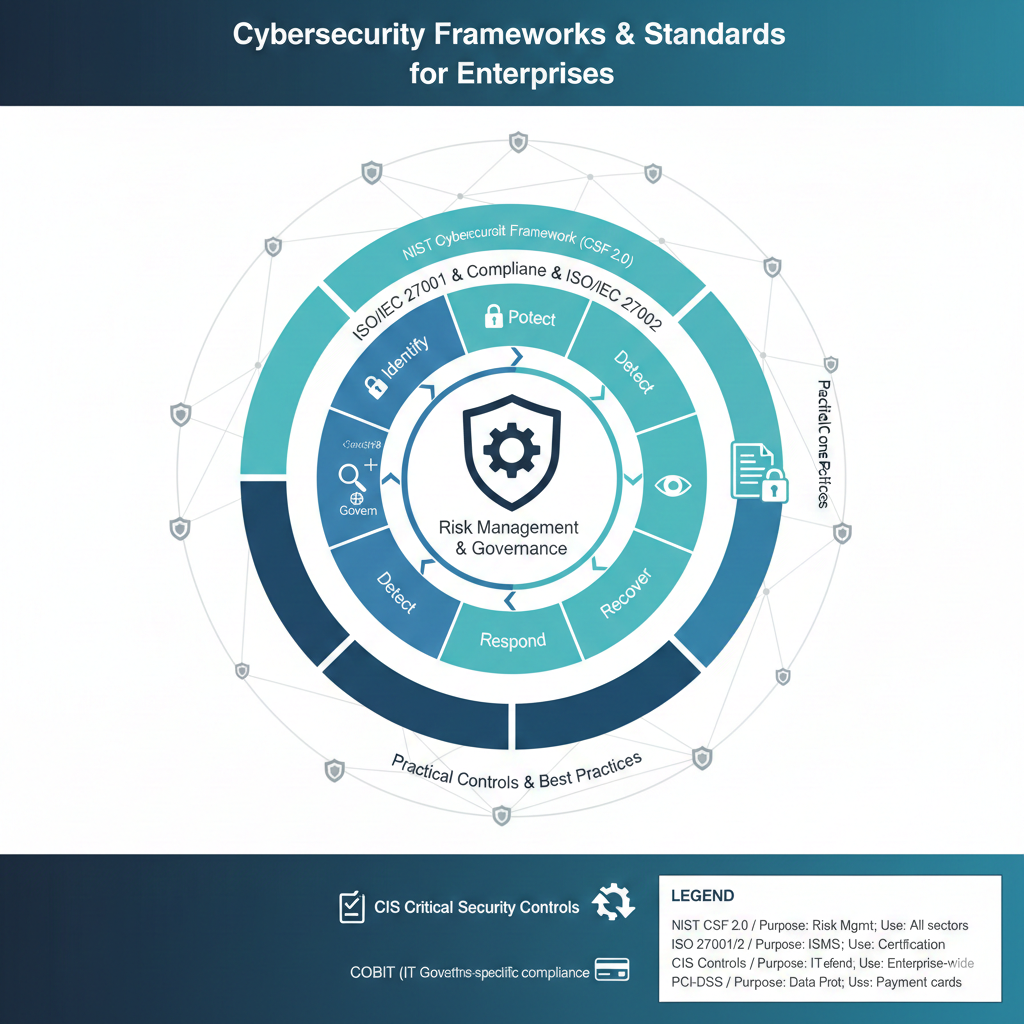
- NIST Cybersecurity Framework: Developed by the National Institute of Standards and Technology, NIST is perhaps the most referenced framework globally. It’s flexible,
focusing on five core functions: Identify, Protect, Detect, Respond, and Recover. Ideal for organisations that want a comprehensive but adaptable risk management approach. - ISO/IEC 27001: An international standard that specifies requirements for an information security management system (ISMS). It’s particularly valued by companies operating across borders because of its universal recognition and emphasis on continuous improvement.
- COBIT (Control Objectives for Information and Related Technologies): Often favoured by enterprises with a strong governance and compliance focus, COBIT provides detailed guidelines on IT management and control, bridging business goals with cybersecurity practices.
- PCI DSS (Payment Card Industry Data Security Standard): Essential for any organisation that handles credit card information, PCI DSS sets precise technical and operational requirements designed to protect cardholder data against breaches.
Beyond these, industry-specific standards and frameworks exist, like HIPAA for healthcare and GDPR compliance mechanisms. Picking the right framework or set of standards often involves understanding your regulatory obligations alongside the strategic security posture you want to establish.
Making Frameworks Work for You
Frameworks aren’t just “checklists” to tick off—they thrive when adapted thoughtfully. Here are a few tips to make the most out of them:
- Start with risk assessment: Identify which assets, processes, or data are most critical. This ensures that your cybersecurity efforts target the highest priorities.
- Customise implementation: Tailor the framework’s controls and processes to your unique business context instead of blindly applying generic guidelines.
- Focus on culture and training: Cybersecurity is not solely an IT function. Engaging your entire team and building awareness is crucial to sustaining your efforts long-term.
- Regularly review and improve: Threat landscapes change. Your cybersecurity measures must evolve similarly to stay effective.
In many ways, adopting a cybersecurity framework is like embarking on a journey rather than completing a one-time project. It’s about continual learning, adjusting, and building resilience against whatever cyber threats come next.
Cybersecurity frameworks and standards might seem daunting at first, but they’re powerful allies for any modern enterprise striving to safeguard its future. They bring clarity, structure, and confidence in an uncertain digital age. Take the time to understand your choices, listen to your team’s needs, and build a programme that works for you—not the other way around.
Next week, we’ll look into real-world cybersecurity incidents and lessons learnt—because sometimes, the best way to prepare is to learn from those who have faced the storm. Until then, stay curious, stay vigilant, and don’t hesitate to ask questions or share your experiences. We’re all in this together!