

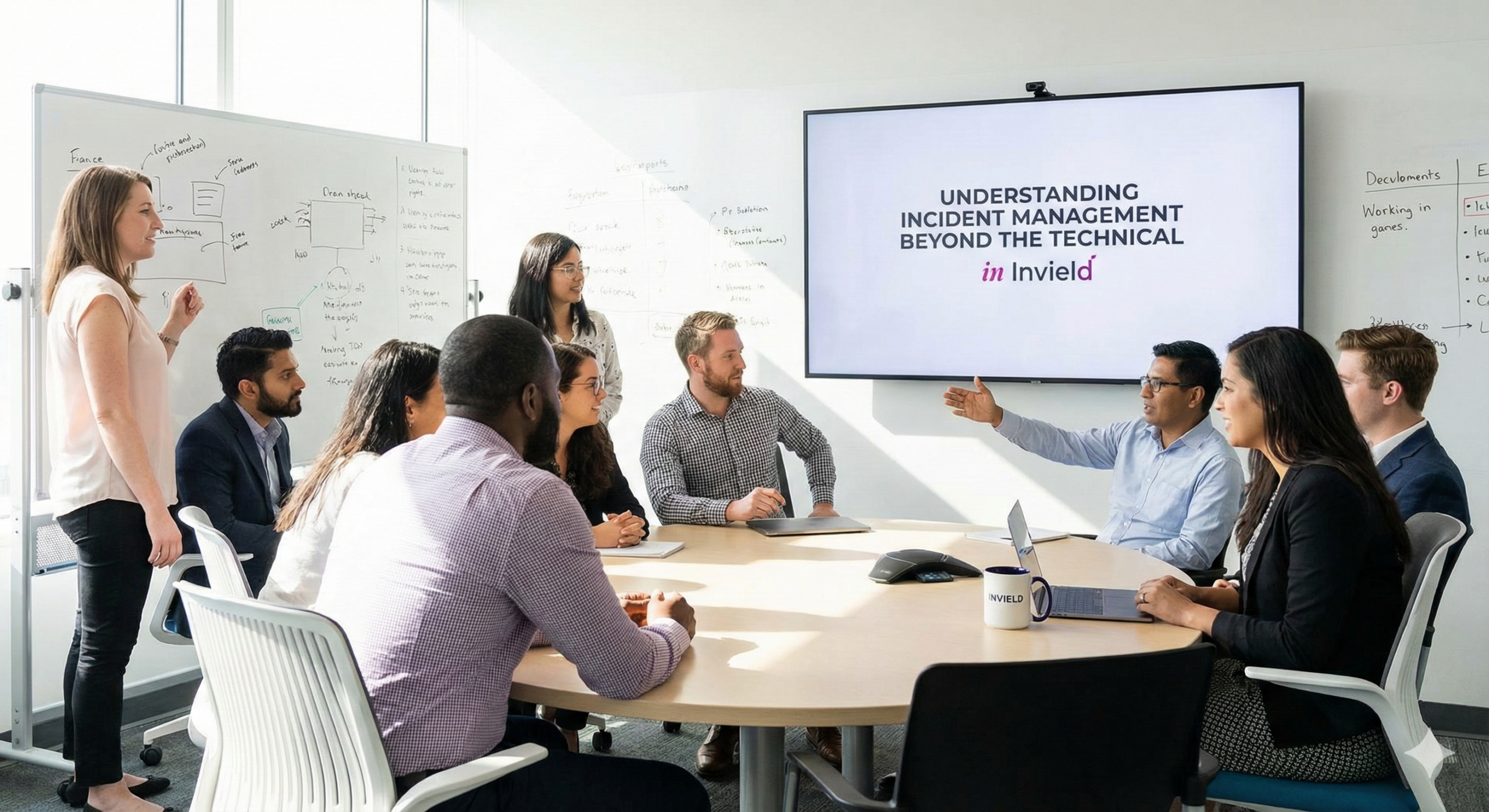
Incident management is not treated as a technical checklist or an emergency-only function. It is built as a calm, structured way to regain control when things start to break. Not through panic. Not through guesswork. But through clarity, prioritisation, and informed action.
In simple terms, incident management is the process of identifying, responding to, and resolving unexpected events that disrupt normal operations. In cybersecurity, these events can include data breaches, malware infections, insider threats, system outages, or suspicious behaviour. But incidents are never just technical problems. They affect people, They affect customers, affect trust. A delayed response can mean lost revenue, regulatory consequences, reputational damage, or long-term customer hesitation. This is why modern organisations can no longer afford reactive or improvised responses. They need a system that works when pressure is high and time is limited.
Why Most Incident Responses Fail Under Pressure
Security teams have many tools, dashboards, and alerting systems. Yet, during an incident, teams still feel overwhelmed. The reason is simple: too much information and too little direction. When everything looks urgent, nothing feels clear. Invield addresses this problem by shifting the focus from alerts to understanding. Instead of reacting to every signal, incident management at Invield helps teams understand:
- What is happening
- Why it matters
- What needs attention first
This approach reduces noise and creates confidence, especially when decisions need to be made fast.
Detection That Makes Sense to Humans
Detection is the first step in any incident response, but detection without context only adds stress. Invield continuously monitors systems, users, and environments to identify unusual behaviour. What makes the difference is how this information is interpreted. Every alert is evaluated with context such as asset importance, user behaviour history, and potential business impact. This ensures that teams don’t waste time chasing harmless anomalies while real threats go unnoticed. Detection becomes meaningful, not overwhelming.
Prioritisation: Knowing What Truly Matters First
Once an incident is detected, the next challenge is deciding what to act on immediately. Not every incident deserves the same response. Some issues require instant containment. Others can be handled methodically. Invield’s incident management framework helps teams prioritise incidents based on risk, severity, and operational impact.
This prevents two common mistakes:
- Overreacting to low-risk issues
- Underestimating high-impact threats
By guiding teams toward the most critical actions first, Invield ensures time and resources are used wisely.
Responding Without Creating More Damage
An effective response is not just fast, it is controlled. During an incident, rushed decisions can cause more disruption than the incident itself. Invield’s response approach focuses on containment without chaos. Actions are designed to stop the threat while keeping essential business operations running. This may include isolating affected systems, secure compromised accounts, blocking malicious activity always with clear accountability and predefined processes. The goal is simple: limit the impact, protect the organisation, and prevent escalation.
Recovery Is Not the End—It’s the Beginning
Many organisations consider an incident “closed” once systems are restored. Invield does not. True incident management continues after recovery. Every incident is reviewed to understand what went wrong, what worked well, and what needs improvement. These insights are used to strengthen controls, improve response playbooks, and reduce future risk. This mindset transforms incidents from setbacks into learning opportunities. Because resilience is built through reflection, not repetition.
Designed for People, Not Just Systems
Technology plays a major role in cybersecurity, but incidents are handled by people. Under pressure, clarity matters more than complexity. Invield’s incident management approach is designed to support human decision-making. Clear workflows, defined roles, and simple communication reduce confusion when stress levels are high. When teams understand what is happening and what is expected of them, they respond better even in the most challenging situations. This human-centred design is what turns processes into performance.
Incident Management as a Leadership Responsibility
Incidents don’t stay confined to technical teams. Leaders, executives, and stakeholders all need answers quickly and clearly. Invield bridges the gap between technical details and business understanding. Incident insights are translated into plain language that helps leadership make informed decisions without delay. Because during an incident, silence creates fear, but clarity builds trust.
Why Organisations Choose Invield
Invield’s strength lies not just in technology, but in how it brings structure to uncertainty. By aligning security operations with business priorities, Invield helps organisations move from reactive responses to confident, well-managed actions.
The result is:
- Faster resolution
- Reduced impact
- Stronger trust
- Better preparedness
Calm Is a Capability
Incidents are inevitable. Panic is optional. With a thoughtful, human-centred approach to incident management, Invield ensures organisations are ready, not just to survive incidents, but to respond with confidence and clarity. Because when things go wrong, the right response makes all the difference.