

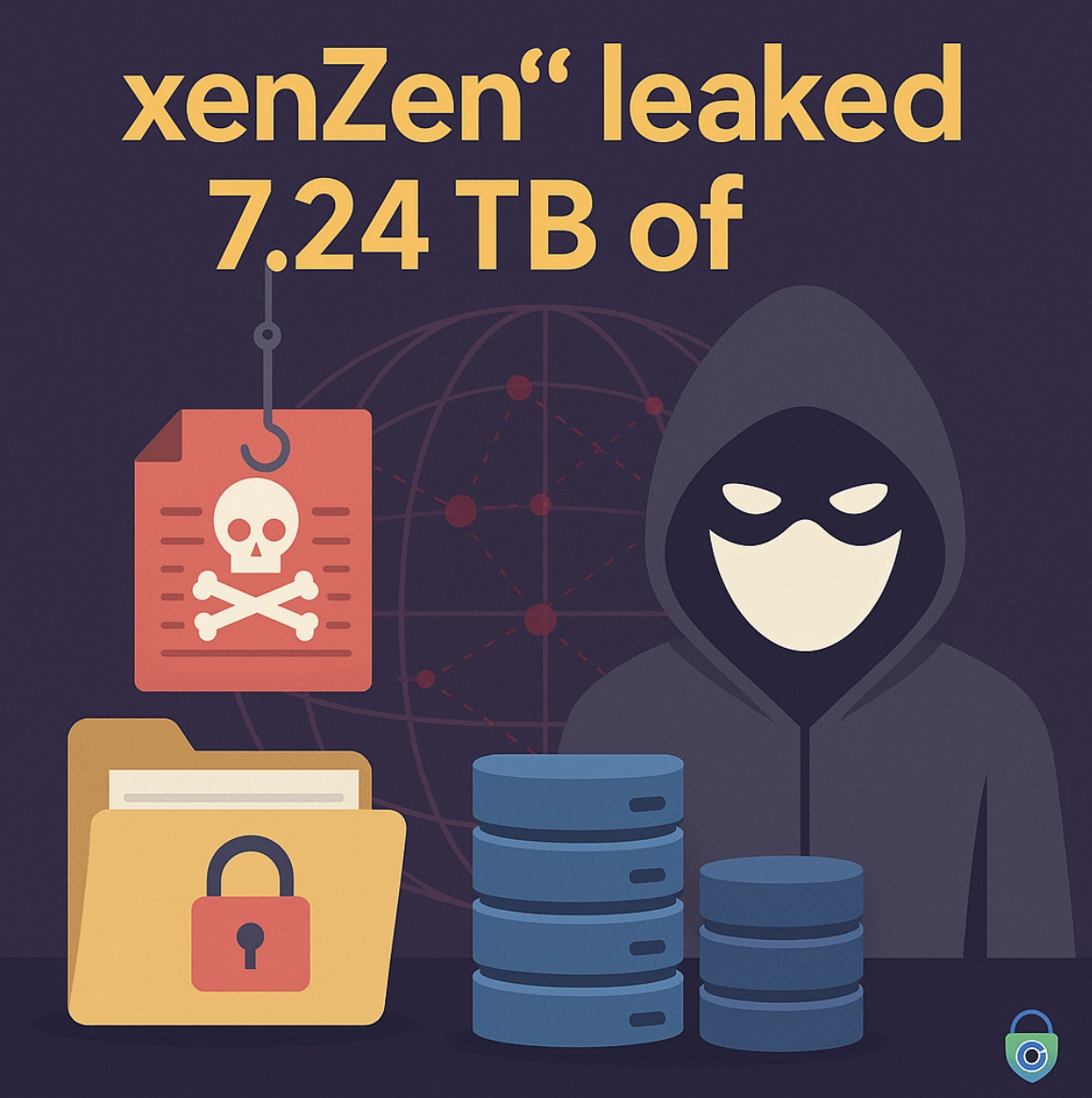
The Indian healthcare sector has witnessed one of its largest-ever data breaches, as Star Health
confirmed a massive leak involving 7.24 terabytes of sensitive information belonging to over 31
million customers. The breach, executed by a hacker operating under the alias “xenZen,” has
raised serious concerns about the security posture of healthcare institutions and their
preparedness against targeted cyberattacks.
What makes this attack even more alarming is the hacker’s claim of sending death threats and even “bullets” to senior company executives, citing dissatisfaction with rejected medical claims. This blend of cyber intrusion and physical intimidation marks a dangerous escalation in threat actor behaviour.

What Exactly Happened?
The breach involved a systematic compromise of Star Health’s internal environment, resulting in large-scale data exposure. Preliminary reports and samples shared online indicate the compromised data includes:
1. Sensitive Personal & Medical Information
Customer demographics, medical histories, policy details, claim information, and financial data were stolen and exfiltrated.
2. Unauthorized Access to Internal Systems
The attacker gained deep access to Star Health’s infrastructure, enabling the extraction of 7.24 TB of highly confidential records.
3. Public Distribution of Data
Instead of quietly selling the data on underground forums, the hacker deployed Telegram chatbots, public channels, and dedicated leak websites to distribute customer information.
4. CIA Triad Impacted
- Confidentiality: Entire datasets exposed publicly
- Integrity: Risk of manipulation or misuse of data
- Availability: Systems may have been disrupted during forensic analysis
5. Late Detection
The breach was detected only after the data became publicly available, pointing to gaps in monitoring, logging, and SIEM alerting.
6. Forensic Investigation Launched
Incident response teams and external cyber forensics specialists have been brought in to assess the initial point of entry, lateral movement, and scope of the breach. However, detailed technical indicators (IOCs, TTPs, exploited vulnerabilities) have not been publicly disclosed.
Why This Breach Matters for Every Organisation
The Star Health incident highlights several critical lessons:
- Even large enterprises with significant budgets can lack strong cybersecurity fundamentals.
- Healthcare data remains a prime target—valuable, sensitive, and difficult to change.
- Threat actors are evolving, blending data theft with extortion and even personal intimidation.
- Continuous monitoring and zero-trust controls are not optional anymore.
- Compliance alone is not protection—organisations must operationalize security, not just document it.
- This breach is a wake-up call for companies across BFSI, healthcare, and technology sectors to assess whether their controls can withstand modern threat actors.
🔐 How Invield Helps Prevent Such Breaches
Invield – The Invulnerable Shield provides end-to-end, proactive protection that helps organisations identify weaknesses, prevent exploitation, and respond rapidly
before damage occurs.
✔ 24×7 Real-Time Security Advisory Alerts
Invield’s advisory intelligence engine tracks global vulnerabilities, vendor patch releases, zero-days, and emerging threats—alerting your team before attackers
leverage them.
✔ Infrastructure, Cloud & Network Vulnerability Scanning
Continuous scanning across AWS, Azure, GCP, on-prem networks, APIs, and web apps ensures you detect misconfigurations and outdated systems early.
✔ DSPM + CIEM for Data Security & Access Control
Invield’s Data Security Posture Management identifies:
- Sensitive data locations
- Over-permissioned users
- Misconfigurations
- Anomalous access patterns
- This prevents unauthorized access and large-scale exfiltration.
✔ Code Security (SAST + SCA)
Scanning source code and third-party libraries helps eliminate exploitable vulnerabilities before deployment—strengthening application security from the inside out.
✔ Dark Web Monitoring
Detects leaked credentials, exposed customer records, and signs of data auctions across forums, marketplaces, and Telegram channels—enabling early response.
✔ Compliance Readiness (IRDAI, ISO 27001, SOC2, RBI)
Invield streamlines compliance without guesswork by aligning your environment with industry standards and highlighting gaps that pose regulatory risks.
✔ Threat Intelligence & Behavioural Insights
Advanced detection correlates suspicious activity, privilege escalations, and lateral movement—flagging risky behaviour before attackers achieve impact.
Conclusion
Conclusion
The Star Health breach is a stark reminder that cybersecurity is no longer optional—it is foundational to business survival. As threat actors grow more aggressive,
organisations must adopt proactive, continuous, and intelligent security controls.
Invield helps companies strengthen their cybersecurity posture, detect issues early, and prevent catastrophic data breaches through real-time intelligence,
comprehensive scanning, and advanced risk monitoring.
For healthcare organisations, insurers, BFSI companies, SaaS platforms, and enterprises—this is the time to act.
Stay protected. Stay compliant. Stay Invulnerable.
To strengthen awareness around this incident and promote better cybersecurity practices across India’s healthcare and insurance sector, this blog is shared with
relevant industry tags including #StarHealthDataBreach #CyberAttack #DataLeak #xenZen #CyberSecurity #InformationSecurity #DataProtection #HealthcareSecurity
DigitalHealthRisks #CyberThreats #DataPrivacy #IRDAICompliance #CyberResilience #Invield #InvieldCybersecurity #TheInvulnerableShield #VAPT #DSPM #CIEM
DarkWebMonitoring #ThreatIntelligence #ISO27001 #SOC2Compliance #CloudSecurity #NetworkSecurity #ZeroTrustSecurity #bitxiatech, helping organisations stay #BitxiaTech
informed and protected against emerging digital threats.